
And why this happens so often in people with Type 2 diabetes
Many people with Type 2 diabetes recognize this situation immediately, even without using a continuous glucose monitor. You’re sick, you eat less than usual, and yet your glucose readings don’t behave the way you expect. Maybe you check occasionally with a finger prick and suddenly see higher numbers than normal. Or you feel sluggish, thirsty, or unsettled, despite the fact that you haven’t really done anything “wrong”.
It feels unexplained. And for many people, it stays that way, simply because no one ever clearly explains why this happens.
In reality, this is a very common pattern in Type 2 diabetes. And it has very little to do with willpower or food choices. It has everything to do with how your body responds to illness.
Being sick puts your body into a different mode
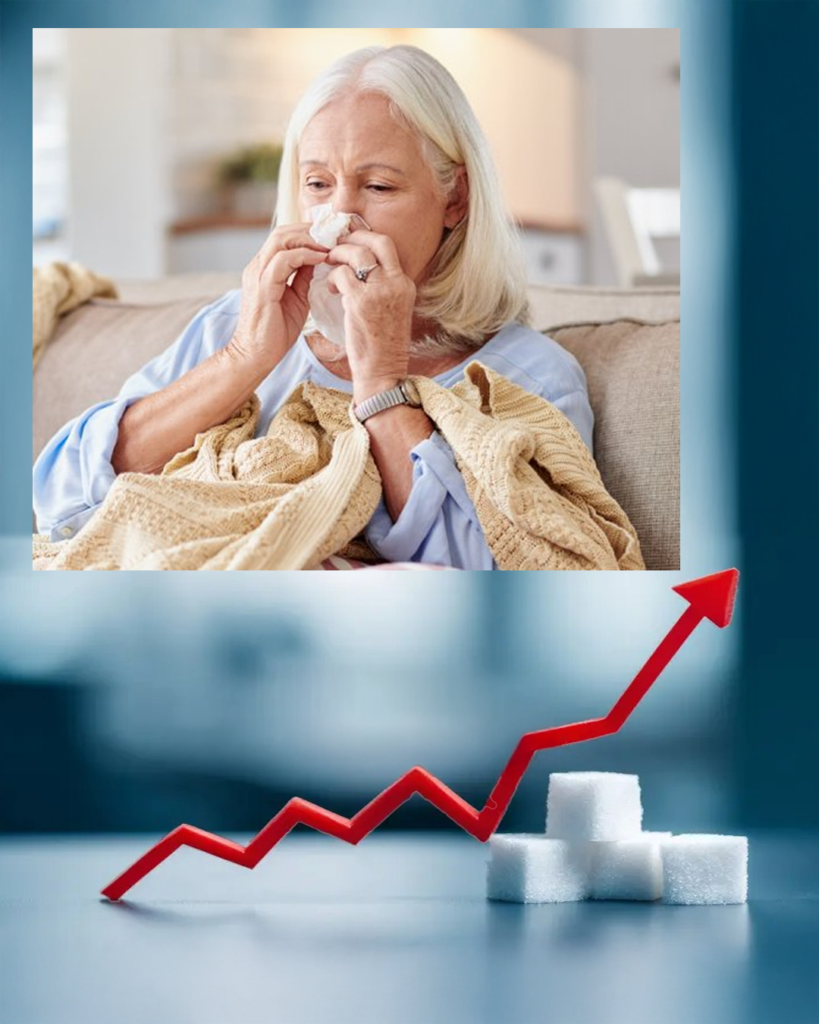
When you’re ill, your body shifts into survival mode. Whether it’s a bad cold, the flu, or another infection, your immune system is working hard to protect you and restore balance. That process requires energy, and your body wants to make sure enough of it is available.
To do that, stress hormones such as cortisol and adrenaline are released. These hormones signal your liver to release extra glucose into the bloodstream. At the same time, they make your body temporarily less sensitive to insulin.
For people with Type 2 diabetes, where insulin resistance already exists, this effect becomes much more noticeable. The glucose that is released remains in the blood longer, leading to higher values that can feel stubborn and difficult to bring down, even when you’re eating very little.
Why eating less doesn’t always lower your glucose
This is often the most confusing part. Many people assume that eating less should automatically lead to lower glucose levels. During illness, the body works differently.
Your body is able to produce glucose on its own, independent of food intake. This happens mainly in the liver and becomes more active when you’re sick. In other words, your body doesn’t rely on what you eat for energy at that moment. It relies on what it produces internally to support recovery.
That’s why glucose levels can appear to be “stuck”. You may eat lightly, skip meals, or have very little appetite at all, yet your readings remain higher than usual. It may feel unfair, but it reflects your body prioritizing healing over tidy numbers.
Even a common cold can be enough
You don’t have to be seriously ill to notice this effect. A strong cold or flu can already be enough to disrupt glucose balance. Poor sleep, reduced physical activity, and an activated immune system often occur together, creating the perfect conditions for glucose levels to rise.
In Type 2 diabetes, where the system is already less flexible, these changes tend to show up more quickly. Sometimes you notice it in your measurements, sometimes mainly in how you feel.
Why it often feels so unclear without a CGM
Without continuous monitoring, you usually only see isolated moments. A higher reading that doesn’t seem connected to food. No clear explanation for why it doesn’t come down again.
That lack of context can be frustrating. You see the result, but not the pattern behind it. It can feel as if your body is reacting randomly, when in fact there is a very logical process at work.
Following your glucose more closely during illness can help bring clarity. Not to control every detail, but to understand what’s happening. With a CGM, you can see that glucose levels stay elevated longer, fall more slowly, and sometimes rise independently of meals. That insight alone often brings reassurance.
What you can do when you’re sick with Type 2 diabetes
During illness, the goal isn’t perfect glucose control. The goal is recovery, perspective, and avoiding unnecessary stress. Monitoring your glucose more frequently with a CGM helps you understand how illness affects your body specifically. It allows you to adjust expectations and prevents overreacting to temporary changes.
Staying well hydrated is especially important.
While drinking enough fluids matters for everyone when they’re sick, it is even more important for people with Type 2 diabetes. Higher glucose levels cause your body to lose more fluid through urine. At the same time, illness often reduces thirst, especially if you have a fever, feel nauseous, or simply don’t feel like drinking.
This creates a vicious cycle. Dehydration can push glucose levels even higher, and higher glucose leads to further fluid loss. That’s why adequate hydration during illness isn’t just a general health tip for people with diabetes, it plays a direct role in keeping glucose from rising unnecessarily.
You don’t need to drink large amounts at once. Small, regular sips throughout the day are often enough to support your body and reduce additional strain.
It’s also important to accept that your body won’t respond the same way it does on a normal day. What usually works well may temporarily work differently. In most cases, balance returns gradually as you recover.
When to be extra cautious
If glucose levels remain high for an extended period, or if you feel significantly worse than expected, it’s wise to contact your healthcare provider. This is especially important if symptoms such as persistent vomiting, severe fatigue, or signs of dehydration occur.
This information is meant to support understanding, not to replace medical advice. When in doubt, it’s always better to check.
Why understanding this makes such a difference
What many people experience is that understanding reduces anxiety. Once you know that higher glucose during illness is driven by stress hormones and increased glucose production by the liver, it stops feeling like a personal failure. There’s nothing to fight or force. There’s simply something to observe.
That’s where continuous glucose monitoring proves its value. Not because life needs to be perfect, but because it shows you what your body is doing in real situations. Even on days when you’re doing everything right and your body is simply focused on healing.
If you notice higher, seemingly unexplained glucose levels while you’re sick, your body isn’t working against you. It’s doing exactly what it needs to do to help you recover.
Marnix de Haan
Healthcare Blogger & Diabetes Expert