
01 · THE AVERAGE
HbA1c
An important measure of your average glucose over about 3 months. It does not reveal individual rises after meals or overnight changes.
“How has my glucose been overall?”
Your HbA1c gives an average. GlucoSensor Q reveals daily glucose patterns, so you can see how breakfast, movement and everyday habits fit into the picture.
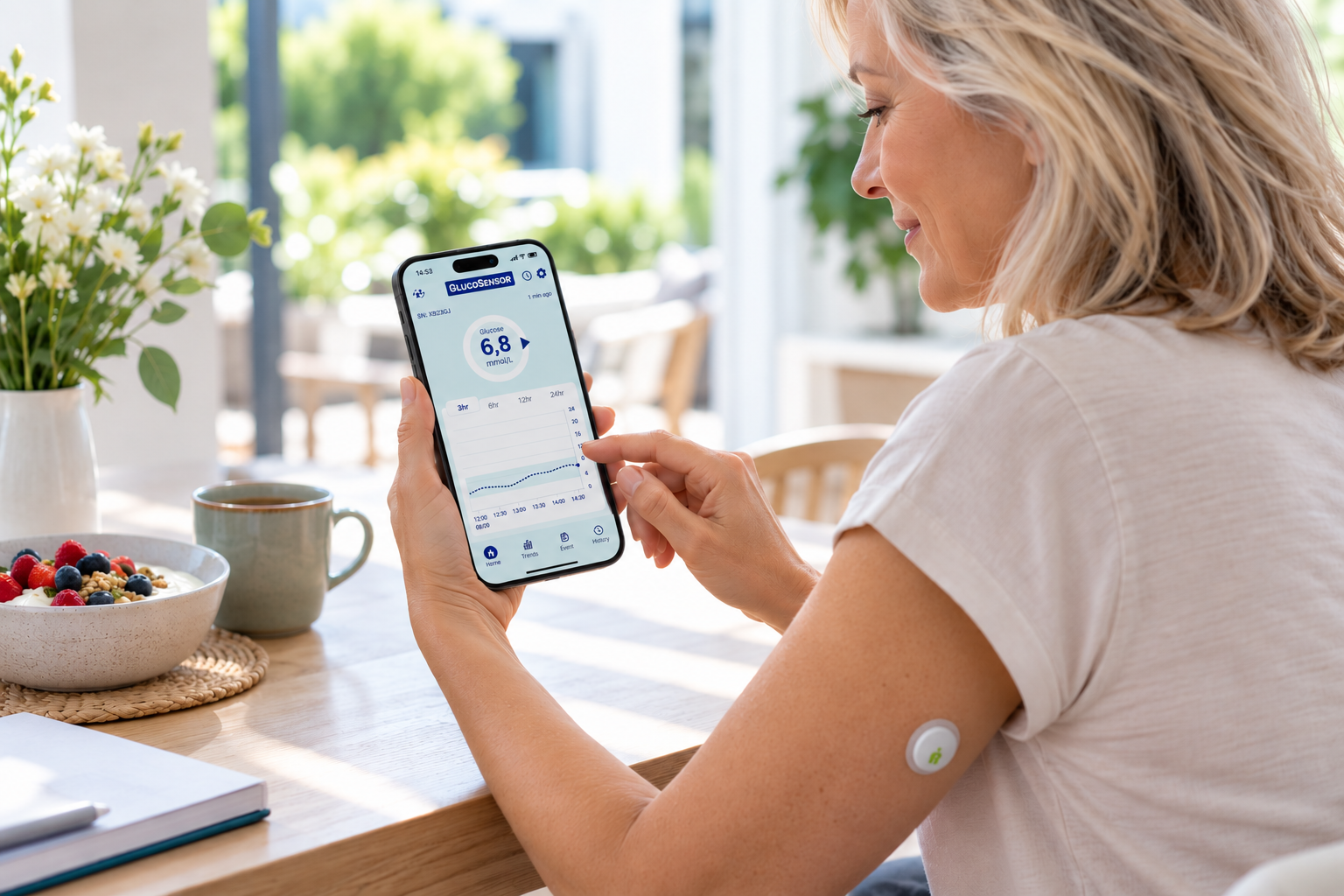
If you mainly rely on your regular diabetes appointments, or an occasional finger prick, much of your daily glucose story can stay out of sight.
An important measure of your average glucose over about 3 months. It does not reveal individual rises after meals or overnight changes.
A useful glucose reading at the moment you test. It cannot show the whole journey before and after that moment.
Frequent readings reveal how your glucose changes across the day and night. Connect the pattern with meals, movement and daily routines.
Together, these insights give you more to work with. Bring your everyday glucose patterns into the conversation at your next diabetes appointment.
A breakfast that feels healthy can still be followed by a long glucose rise. Without a continuous view, you may never see how long it lasts.
With GlucoSensor Q, you can compare mornings. Try a different breakfast or portion, keep a note of what changed and see how your glucose responds.
One useful discovery can give you a clear place to start.
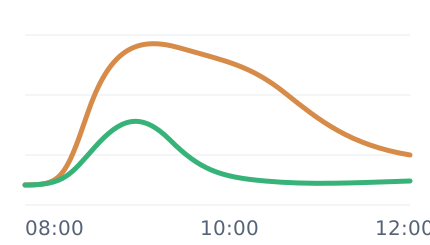

You do not need to change everything at once. Seeing your own patterns helps you choose what to explore first and build habits that support your glucose management.
Compare the foods and portions you usually eat. Look beyond the peak to see how long the rise lasts.
Notice what happens on days with a walk after a meal, compared with your usual routine.
Compare similar days. Bring recurring rises, overnight changes and your questions to your healthcare provider.
Two sensors give you up to 28 days to move from “I wonder” to “now I can see”. Use the time to observe, compare and build a clearer picture.
Follow your normal routine. Notice meals, mornings and overnight patterns that stand out.
Compare a different breakfast or portion. Keep other factors as similar as you can.
Look at similar meals on different days. Notice where activity and daily routines fit in.
Review recurring patterns and share your questions with your healthcare provider.
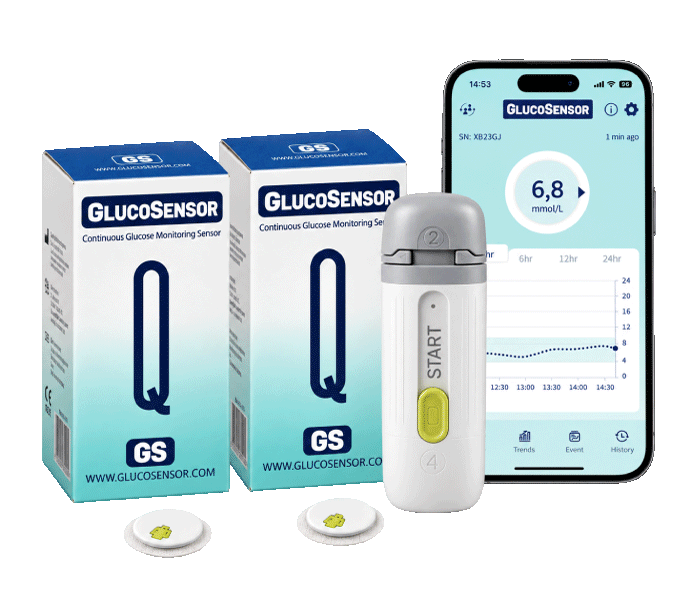
Start with two sensors and discover the patterns behind your everyday numbers. Simple to get started. Easy to fit into daily life.
€ 89,95
Up to 4 weeks of insight · € 44,98 per sensor
A little more understanding can make the first step feel much easier.
About the HbA1c test: NIDDK.
Continuous glucose monitoring makes daily glucose patterns visible. You can see what happens after meals, how long rises last and what changes overnight. This gives you practical insights to discuss with your healthcare provider and helps you make more informed everyday choices.
They give you different information. HbA1c shows your average glucose over about 3 months, while CGM reveals changes during the day and night. The daily detail adds context to your regular diabetes reviews.
GlucoSensor Q measures glucose in interstitial fluid and sends readings to a compatible smartphone approximately every 3 minutes. You can review your glucose value, trends and history in the app. It is designed for adults aged 18 and over.
Each GlucoSensor Q sensor can be worn for up to 14 days. The Starter Set includes two sensors, giving you up to 28 days to observe and compare your glucose patterns.
Yes. Breakfast is a useful place to begin. Note what and when you eat, look at the glucose pattern afterwards and compare similar mornings. Repeated observations are more useful than drawing conclusions from one reading.
Start seeing your patterns. Discover which daily choices are worth a closer look.